Hi there!
Discover hidden Korea
Korea is much more than Seoul. Cities, markets, beaches and flavors to discover at your own pace.
 City of the week
Gyeonggi-do · south of Seoul
Osan 오산
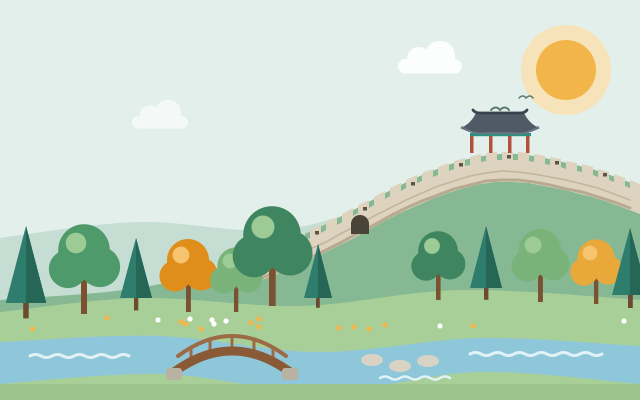
A market, a forest and a fortress with a legend
Explore OsanExplore
 Cities
 Cooking
 Beauty
 Culture
 Travel
 Phrases
Cities beyond Seoul
See all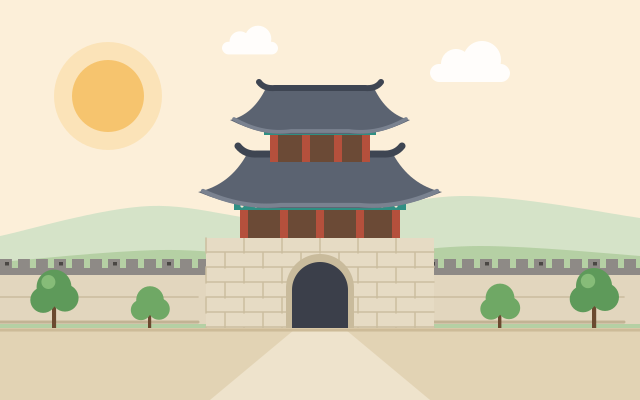 Gyeonggi-do · provincial capital
Suwon 수원
An 18th century fortress wall you can walk
 Jeonbuk · southwest Korea
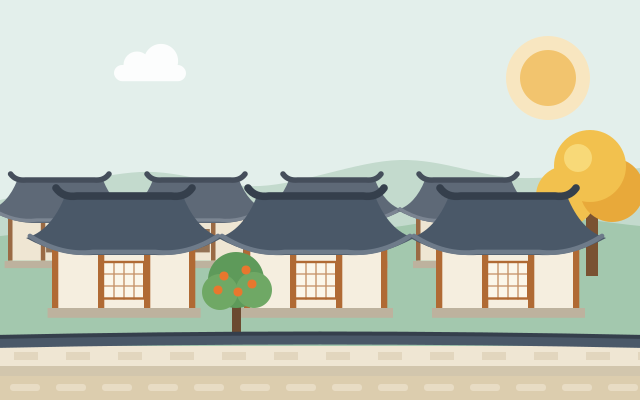
Jeonju 전주
Traditional houses and the home of bibimbap
 Gyeongsangbuk-do · southeast Korea
Gyeongju 경주
Silla's capital, a museum without walls
 Gyeongsangbuk-do · inland
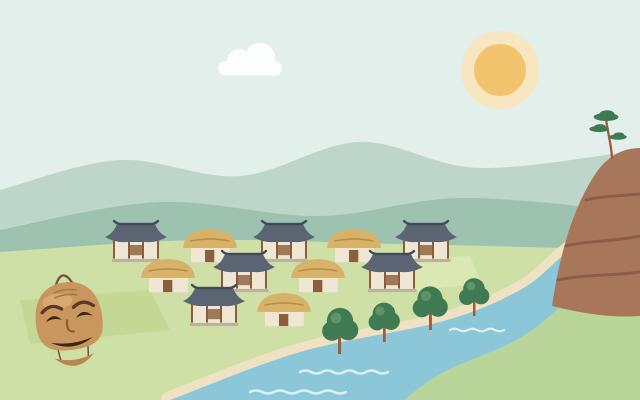
Andong 안동
Masks, old villages and Confucian tradition
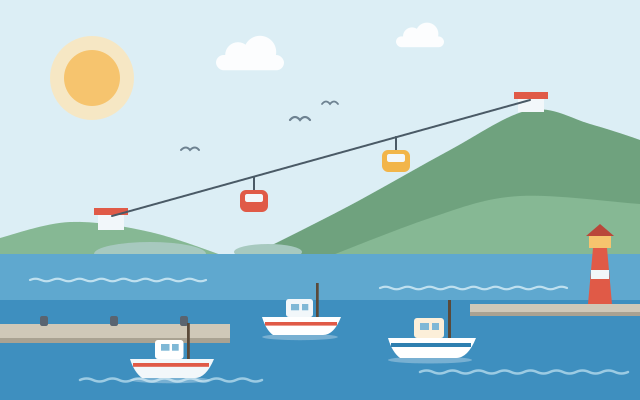 Gyeongsangnam-do · south coast
Tongyeong 통영
A harbor, islands and hillside murals
 Jeollanam-do · south coast
Yeosu 여수
A sea that glows at night
 Gangwon · east coast
Gangneung 강릉
Beaches, seaside coffee and seawater tofu
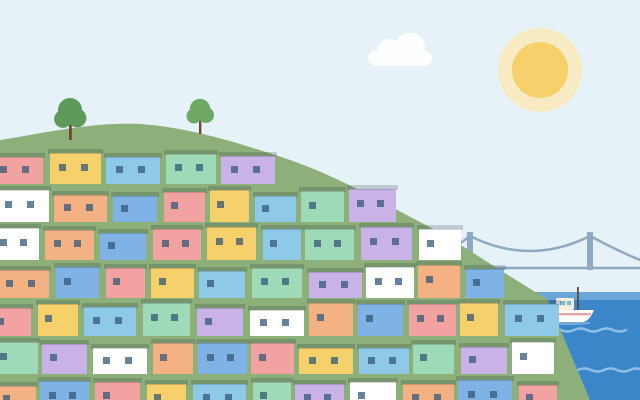 Metropolitan city · southeast coast
Busan 부산
Mountains, beaches and Korea's biggest port
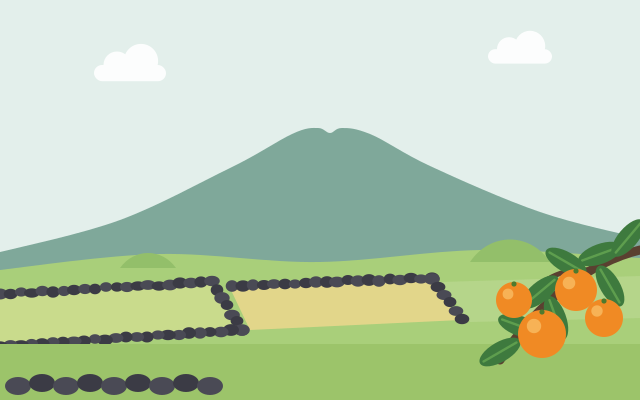 Jeju Island · south of the peninsula
Jeju 제주
A volcanic island of tangerines and sea
Korean cooking at home
See all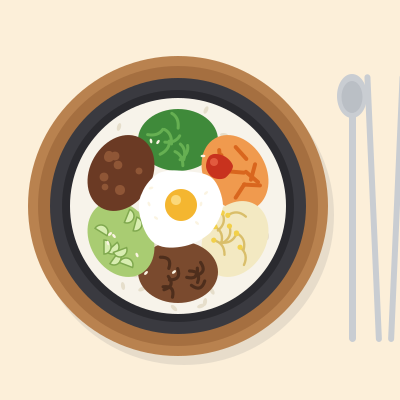
Bibimbap Mixed rice bowl
40 min · 비빔밥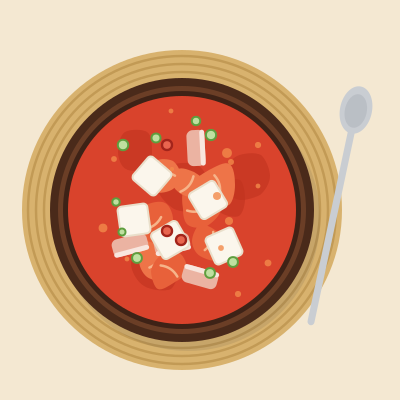
Kimchi jjigae Kimchi stew
35 min · 김치찌개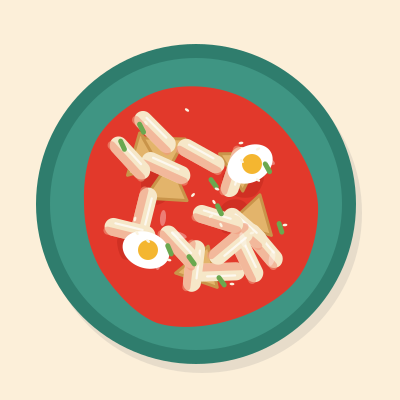
Tteokbokki Spicy rice cakes
30 min · 떡볶이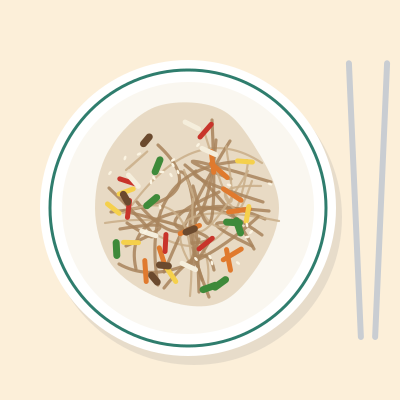
Japchae Stir-fried glass noodles
40 min · 잡채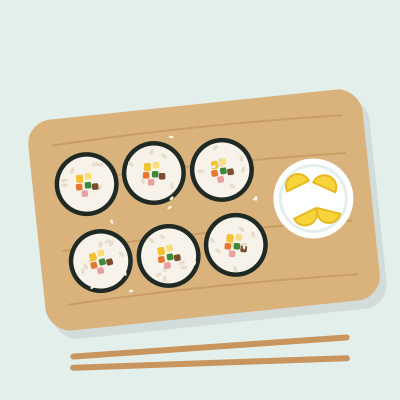
Gimbap Seaweed rice rolls
50 min · 김밥
Dakgalbi Spicy stir-fried chicken
60 min · 닭갈비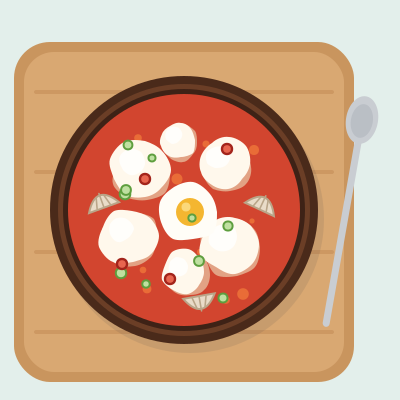
Sundubu jjigae Soft tofu stew
25 min · 순두부찌개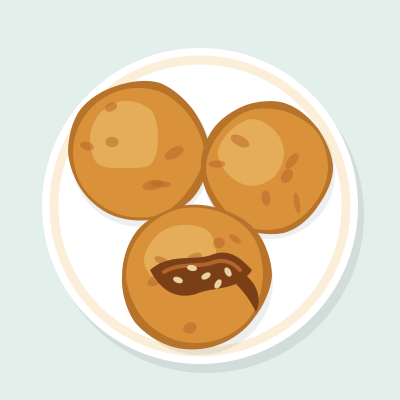
Hotteok Sweet filled pancakes
100 min · 호떡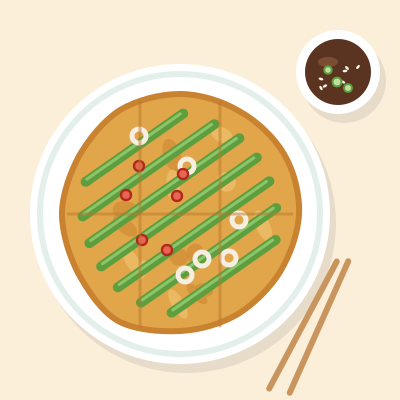
Pajeon Green onion pancake
25 min · 파전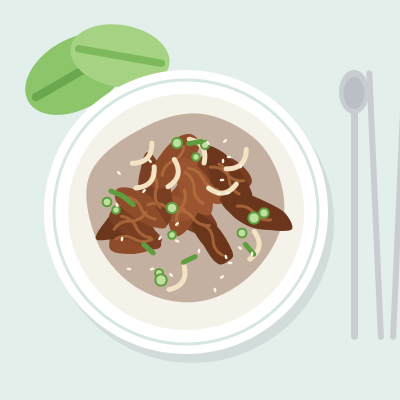
Bulgogi Marinated grilled beef
60 min · 불고기
K-beauty routines
See all- Oily skinFor skin that gets shiny on the forehead, nose and chin during the day, with pores that look larger.
- Dry skinFor skin that feels tight after washing, with rough or flaky patches, especially in winter or with air conditioning.
- Combination skinFor skin that is shiny in the T-zone (forehead, nose and chin) and normal or dry on the cheeks.
- Sensitive skinFor skin that easily stings, itches or turns red with new products, wind or changes in weather.
- Daily sun careFor every skin type, every day, even when it's cloudy. In Korea it is a fixed step of the morning routine.
- Double cleansing, explainedFor nights when you wore sunscreen or makeup, or your skin built up a lot of oil. You don't need it every day.
Culture in a nutshell
See all- Hangul, the alphabet you can learn in an afternoonBasics · The Korean alphabet is called 한글 (Hangeul), though you will often see it spelled “Hangul”. King Sejong the Great, 세종대왕 (Sejong Daewang), completed it in 1443 and presented it to the people in 1446 in a book called 훈민정음 (Hunminjeongeum). That manuscript has been on UNESCO's Memory of the World Register since 1997, and Korea celebrates Hangeul Day every 9 October.
- Respect, age and speech levelsBasics · Korean changes depending on who you are talking to. 존댓말 (jondaenmal) is polite speech and 반말 (banmal) is casual speech, used with very close friends or with children. With strangers, older people and shop staff, always use sentences ending in -요 (-yo) or -니다 (-nida), as in 안녕하세요 (annyeonghaseyo).
- Table mannersEtiquette · Before eating, say 잘 먹겠습니다 (jal meokgetseumnida), “I will eat well”, and afterwards 잘 먹었습니다 (jal meogeotseumnida), “I ate well”. When eating with older people, wait for them to pick up their spoon first and try not to finish long before they do.
- Drinking etiquetteEtiquette · The best known drinks are 소주 (soju), clear and smooth, and 막걸리 (makgeolli), a milky, light fermented rice drink. They almost always come with 안주 (anju), food to share while drinking. To toast, say 건배 (geonbae).
- Seollal, Lunar New YearHolidays · 설날 (Seollal) is the first day of the lunar year and one of Korea's two biggest holidays. It is a three-day holiday, covering the eve, the day itself and the day after, and millions travel to their hometowns to be with family. Since December 2023, Seollal and Chuseok have been listed as National Intangible Cultural Heritage.
- Chuseok, the harvest festivalHolidays · 추석 (Chuseok), also called 한가위 (Hangawi), falls on the 15th day of the eighth lunar month, under the harvest full moon, usually in September or October. Like Seollal, it is a three-day holiday to give thanks for the harvest and gather with family.
- Convenience stores, your neighborhood kitchenFood · Convenience stores, 편의점 (pyeonuijeom), are on almost every corner, even in small towns, and many are open 24 hours, though not all. They are perfect for a quick, cheap meal: 삼각김밥 (samgak gimbap), triangle rice balls wrapped in seaweed; 도시락 (dosirak), ready-made lunch boxes; and 라면 (ramyeon), instant noodles.
- Noraebang and PC bang: Korea's room cultureDaily life · 방 (bang) means “room”, and Korea has rooms for almost everything. 노래방 (noraebang) is karaoke in private rooms: you rent a room for your group by the hour, with microphones, a screen and a huge song list that includes English songs.
- Cafés: Korea's living roomDaily life · In Korea, cafés work like a living room: people chat, study or spend hours on a laptop there. People who study in cafés are called 카공족 (kagongjok). It is good manners to order something per person and not to hog a big table for hours when the place is busy.
- K-drama wordsFandom · Many drama words are about age and affection. 오빠 (oppa) is what a woman calls a close older man, whether a brother, friend or boyfriend. 언니 (eonni, often spelled “unnie” online) is what a woman calls an older woman. Men say 형 (hyeong) to an older man and 누나 (nuna) to an older woman.
- K-pop fandom vocabularyFandom · K-pop fandom has its own language, much of it borrowed from Korean. A 컴백 (keombaek, “comeback”) is not a return after a long break: it is any time an artist releases new music and starts performing it on music shows.
- Jeong, affection that builds upBasics · 정 (jeong) is hard to translate. It is the affection, attachment and loyalty that slowly grow between people who share time, like neighbors, coworkers or the lady at the market stall you always visit. It is not romance and not just friendship: it is a bond that builds up.
Plan your trip
See all- Entering Korea: visa, K-ETA and arrivalFor tourism, passports from Mexico, Brazil, Chile, Colombia, Peru and Argentina need no visa for short stays. Mexico, Brazil, Chile, Colombia and Peru have visa waiver agreements with Korea. The official K-ETA table allows up to 90 days (for Mexico, the table says 3 months). You cannot work on this type of entry. Verified in October 2026.
- Getting around: T-money, KTX and busesT-money is a reloadable card for subways, city and intercity buses, trains and taxis with a card reader, almost everywhere in the country. Buy and top it up at convenience stores such as GS25, CU or 7-Eleven and at subway machines. Top up with cash, the safest option, since many foreign cards do not work for this. Switching between bus and subway within the time limit gets you a transfer discount.
- Maps and handy appsAccording to VisitKorea, Google Maps turn-by-turn (GPS) navigation does not work in Korea, though this may change. That is why most people use Naver Map or Kakao Map. Naver Map comes in English, Japanese and Chinese; Kakao Map in English. Both plan routes on foot, by subway, by bus and by car. Verified in October 2026.
- Money, cards and tax refundThe currency is the won (원, won). Notes come in 1,000, 5,000, 10,000 and 50,000 won, and coins in 10, 50, 100 and 500.
- Plugs and voltageKorea runs on 220 V at 60 Hz. Sockets take two round pins, types C and F, as in much of Europe.
- Emergencies and helpPolice: 112. Fire, ambulance and rescue: 119. If you do not speak Korean, calmly say “English” and wait: 112 has English and Chinese interpreters around the clock.
- Weather and seasonsKorea has four very distinct seasons, opposite to the southern hemisphere: when it is winter in Brazil, Chile or Argentina, it is summer in Korea.
- Quick etiquetteShoes: take them off at the door of homes, and also in restaurants or lodgings where people sit on the floor. If you see shoes at the entrance, do the same.
Useful phrases
See all- 안녕하세요annyeonghaseyoHello
- 감사합니다gamsahamnidaThank you
- 죄송합니다joesonghamnidaI am sorry
- 저기요jeogiyoExcuse me (to get attention)
- 네neYes
- 아니요aniyoNo
- 만나서 반가워요mannaseo bangawoyoNice to meet you
- 안녕히 계세요annyeonghi gyeseyoGoodbye (when you are the one leaving)
- 안녕히 가세요annyeonghi gaseyoGoodbye (when the other person is leaving)
- 저는 멕시코에서 왔어요jeoneun meksikoeseo wasseoyoI am from Mexico